Audio playback
Why School Zones Need More Than Signs
Is this your podcast and want to remove this banner? Click here.
Chapter 1
The Limits of Speed Limit Signs
JKP
G’day everyone, Jason here from Speed Humps Australia. Welcome back to the podcast—if you caught our last episode, you’ll remember we talked a lot about how slowing down in school zones isn’t just a nice idea, it’s absolutely critical. But today, I wanna dig into something that’s been bugging me for years: those “10 KM/H” signs you see everywhere around schools. Now, don’t get me wrong, signs have their place. But let’s be honest—how many times have you seen a sign and just, well, driven right past it without really changing your behaviour? I mean, I’m guilty of it myself, especially when I’m in a rush or distracted. And I know I’m not alone. Whether it’s parents running late, couriers trying to make a deadline, or just someone unfamiliar with the school layout, those signs often turn into, like, polite suggestions rather than actual rules. The thing is, signs rely on good intentions. And, as we all know, good intentions don’t always translate to safe driving—especially in places where a small mistake can have big consequences, like a school car park or drop-off zone.
JKP
I’ll tell you a quick story—this goes back to when my family first got the idea for Speed Humps Australia. We were managing some properties up in Cairns, and out of the blue, we got this invoice for a speed hump installation. At first, I was like, “Why do we even need this? We’ve got signs up already!” But then, after a bit of digging and, honestly, a bit of frustration, it hit me—those signs weren’t actually stopping anyone from speeding. They were just, you know, there. That invoice was the spark that got us thinking: there’s gotta be a better way to actually make people slow down, not just ask them nicely. And that’s really the heart of it—signs alone just don’t cut it when it comes to keeping kids safe.
Chapter 2
Physical Traffic Calming: Speed Humps and More
JKP
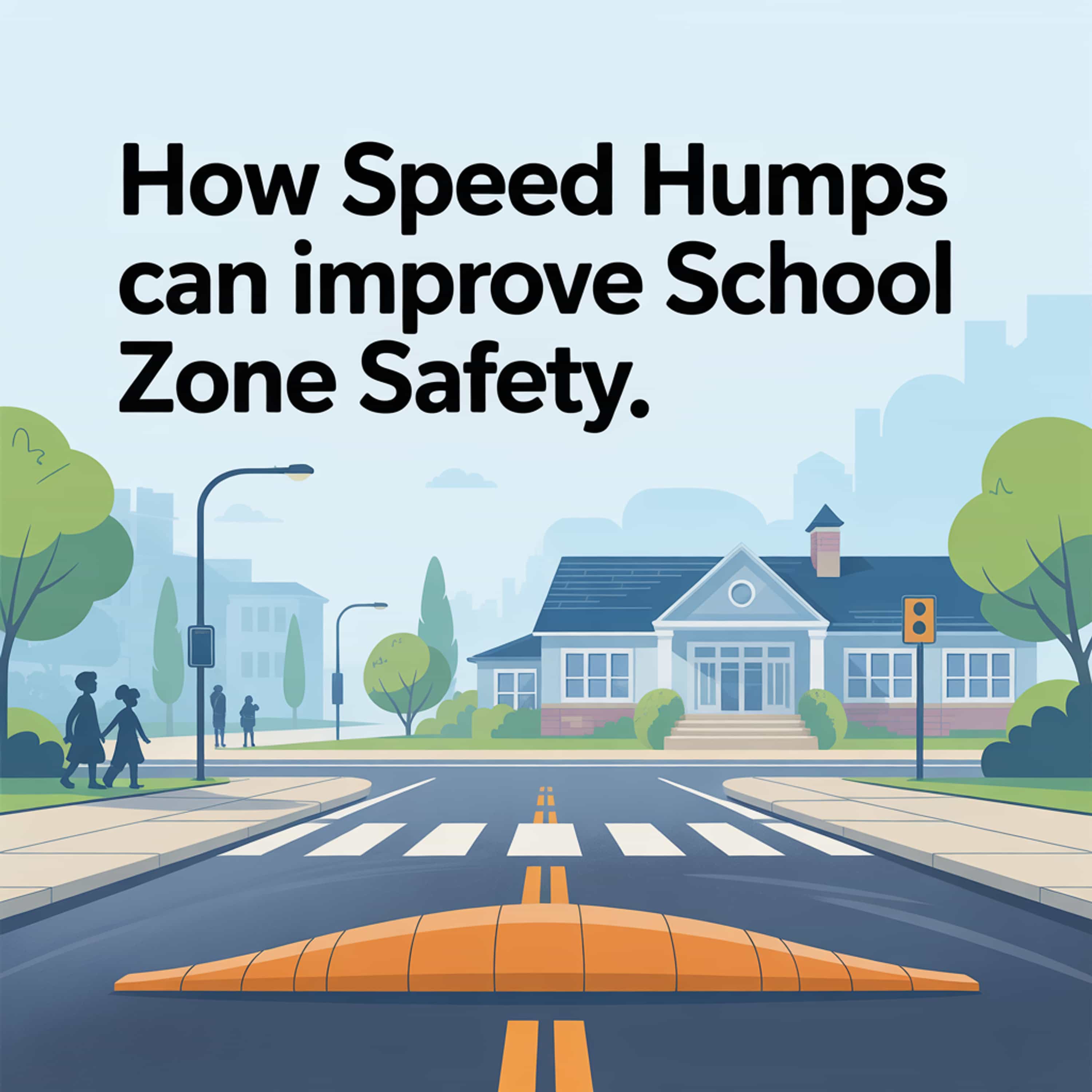
So, what does work? Well, as we touched on last time, it’s all about physical traffic calming. Speed humps—especially the flat-top ones—are absolute game changers. Unlike those old-school speed bumps that just jolt you and your suspension, flat-top humps slow you down in a controlled, predictable way. They’re not just a nuisance; they’re a quiet enforcer. When you’ve got them spaced out properly, with clear line markings and the right signage, drivers naturally fall into a rhythm of caution. It’s not about punishing people, it’s about setting up the environment so that safe behaviour is the default.
JKP
And it’s not just speed humps. Rumble bars and rumble strips—those are like little wake-up calls for drivers. You hit them, and suddenly your steering wheel shakes, there’s a bit of noise, and you’re instantly more alert. They’re perfect for those transitional zones, like right before a pedestrian crossing or an entry gate. And then you’ve got wheel stops, which are a bit more subtle but just as important. They keep cars from creeping too far forward into pedestrian areas, which is a huge deal in busy school car parks.
JKP
I’ll give you a real-world example—there was a school up in Queensland, big ring-road car park, lots of traffic. They had all the signs and crossings, but drivers just weren’t slowing down, especially during the morning rush. So, they installed six flat-top polyethylene speed humps. The change was immediate. Vehicle speeds dropped, and parents started telling the school they felt safer straight away. The school’s safety compliance officer even said, “They look great, but more importantly, I’ve already seen the positive impact.” That’s the kind of feedback that really sticks with you. It’s not just about ticking a box—it’s about making a real difference.
Chapter 3
Overcoming Pushback and Building Lasting Safety
JKP
Now, I know what some of you might be thinking—“But Jason, don’t speed humps slow down traffic too much? Aren’t they expensive?” And look, those are fair questions. But here’s the thing: slowing down traffic is the whole point. If keeping the flow moving is more important than keeping kids safe, well, I think we’ve got our priorities mixed up. And as for cost, when you compare the price of a few speed humps or rumble bars to the cost of a serious accident—or even just the peace of mind they bring—it’s a no-brainer. Plus, these things are built to last. You’re looking at a five-year lifespan, heavy-duty rating, and if you keep up with regular maintenance, they just keep doing their job.
JKP
That brings me to another key point—maintenance. No solution is “set and forget.” The best schools I’ve worked with do regular audits of their car parks and crossings. They check if the speed humps are still visible, if the rumble bars are worn, if the wheel stops are in the right place. Repainting, replacing faded elements, staying proactive—that’s what keeps these systems working year after year.
JKP
I’ve had a lot of conversations with school facility managers over the years, and the feedback that means the most is when they say, “It’s not just about how it looks—it’s about the results.” When you see vehicle speeds drop, when parents and staff feel safer, that’s when you know you’re on the right track. So, if you’re out there managing a school or just care about your local community, ask yourself—are we relying too much on signs? If the answer’s yes, maybe it’s time to rethink things. That’s it for today, but we’ll be back soon with more on how to make our roads—and our schools—safer for everyone. Safety first, adventure always. Catch you next time.